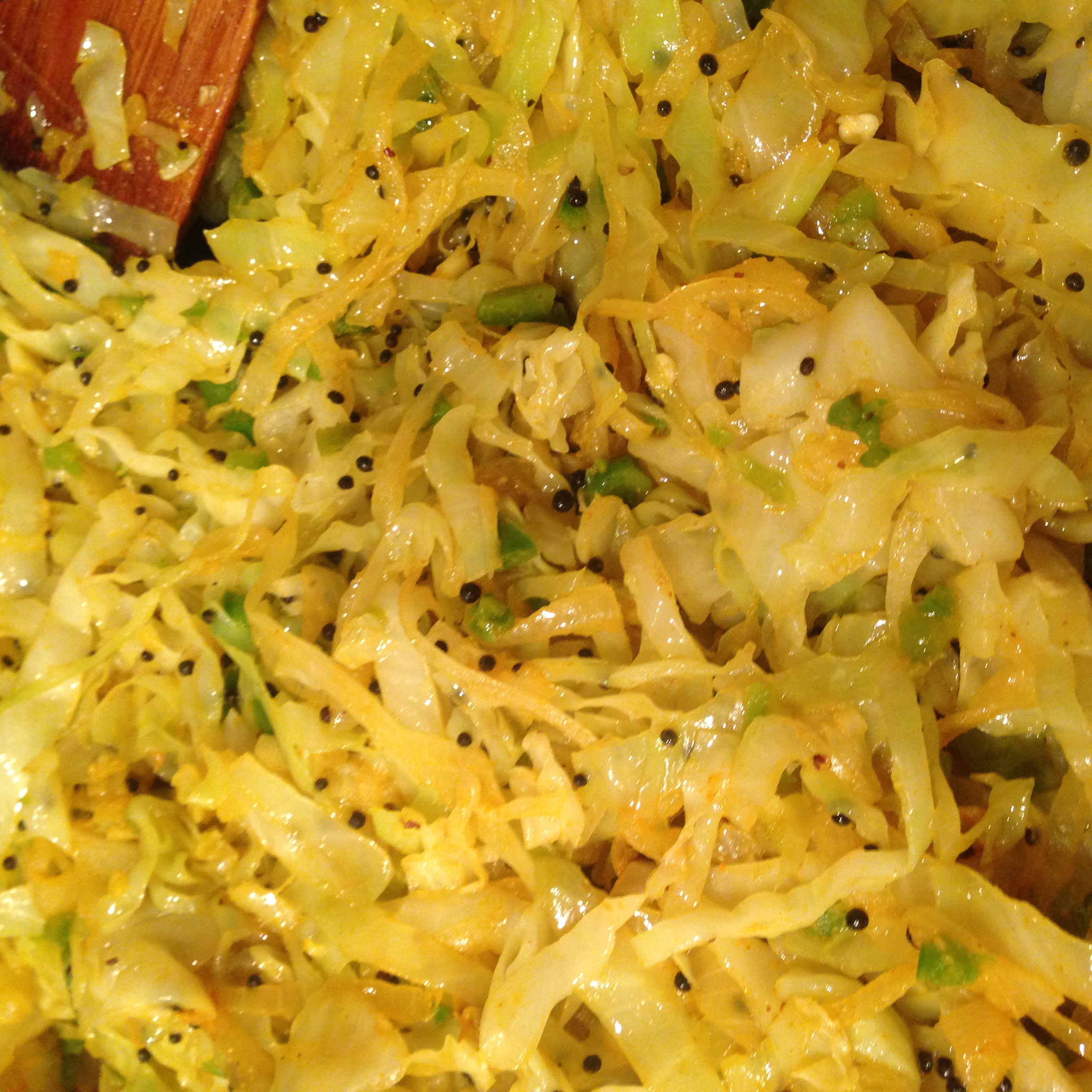
Tender Cabbage with Black Mustard & Turmeric

IMG_9290

In a very large skillet which you are able to cover, heat 3 tbs of neutral oil or ghee over medium-high heat.

When hot add :

1 tbs black mustard seed

Cover dish and allow black mustard seed to pop. When the seeds begin to settle, add:

8 oz onion, very thinly slice.

Reduce heat to medium and cook until softened, stirring occasionally.

Add :

1 lb 4 oz cabbage, thinly sliced

Salt to taste

Cook until wilted, stirring occasionally.

Add :

1 tbs sherry, white wine or shao xing wine

2-4 oz fresh chile, small dice

1 oz garlic, minced

1 tsp turmeric powder

Allow the alcohol to cook off, then reduce the heat to low and cover the pan.

Cook, covered, until the cabbage is tender and soft, usually 45 minutes or so.

Taste and adjust seasonings. Serve hot or keep warm, garnish with cilantro or parsely, chives or field garlic snips, fresh chiles or grated ginger.

An excellent side dish which highlights the tenderness of properly-cooked cabbage and the subtle flavors of black mustard seed and turmeric root. This dish can also be made with grated fresh turmeric, which can be added at the same point in cooking. Many people who claim not to like cabbage enjoy a tender cabbage dish like this, which brings out the natural sweetness in cabbage through slow cooking. The spices used are mild and complementary, rather than overwhelming. I would vary the level of chiles depending on what else I was serving this with–usual just a little chile for flavor, this dish is unassuming enough to be used as a side dish in a meal of almost any cuisine, vegetarian or not. More chiles can be added if the dish is to be served as accompaniment to a strong-flavored main course such as meat or oily fish.

Key : The key to this recipe is to cook the cabbage thoroughly until tender, for as long a time as it takes. This is a good dish to make a day ahead or earlier in your cooking, and will be just fine reheated or kept warm.

Banana Bread with Black Walnuts, Vietnamese Cinnamon & Nutmeg

IMG_9301

Preheat oven to 350° F.

Whisk together in a large bowl :

1 1/3 cup all-purpose flour

1/4 tsp baking powder

1/2 tsp baking soda

1/2 tsp salt

Whisk together in a small bowl :

1/2 cup neutral oil (sunflower or vegetable is best, 1/4 cup can be replaced with walnut oil)

1/2 cup soy or rice yogurt (or regular yogurt)

Add wet ingredients to dry ingredients, along with :

1/2 cup black walnuts, chopped (or 1/4 cup almonds and 1/4 cup English walnuts)

1 1/4 cup banana, mashed or chopped with :

1/4 cup sugar or palm sugar (optional)

1 tsp vanilla

Fold all ingredients together, without overmixing.

Place in a lightly oiled loaf pan.

Dust top of bread with nutmeg and vietnamese cinnamon, freshly grated and ground if possible.

Bake until a toothpick inserted into the loaf comes out clean, usually an hour.

Allow to rest in pan for ten minutes before removing from pan to cool on a rack.

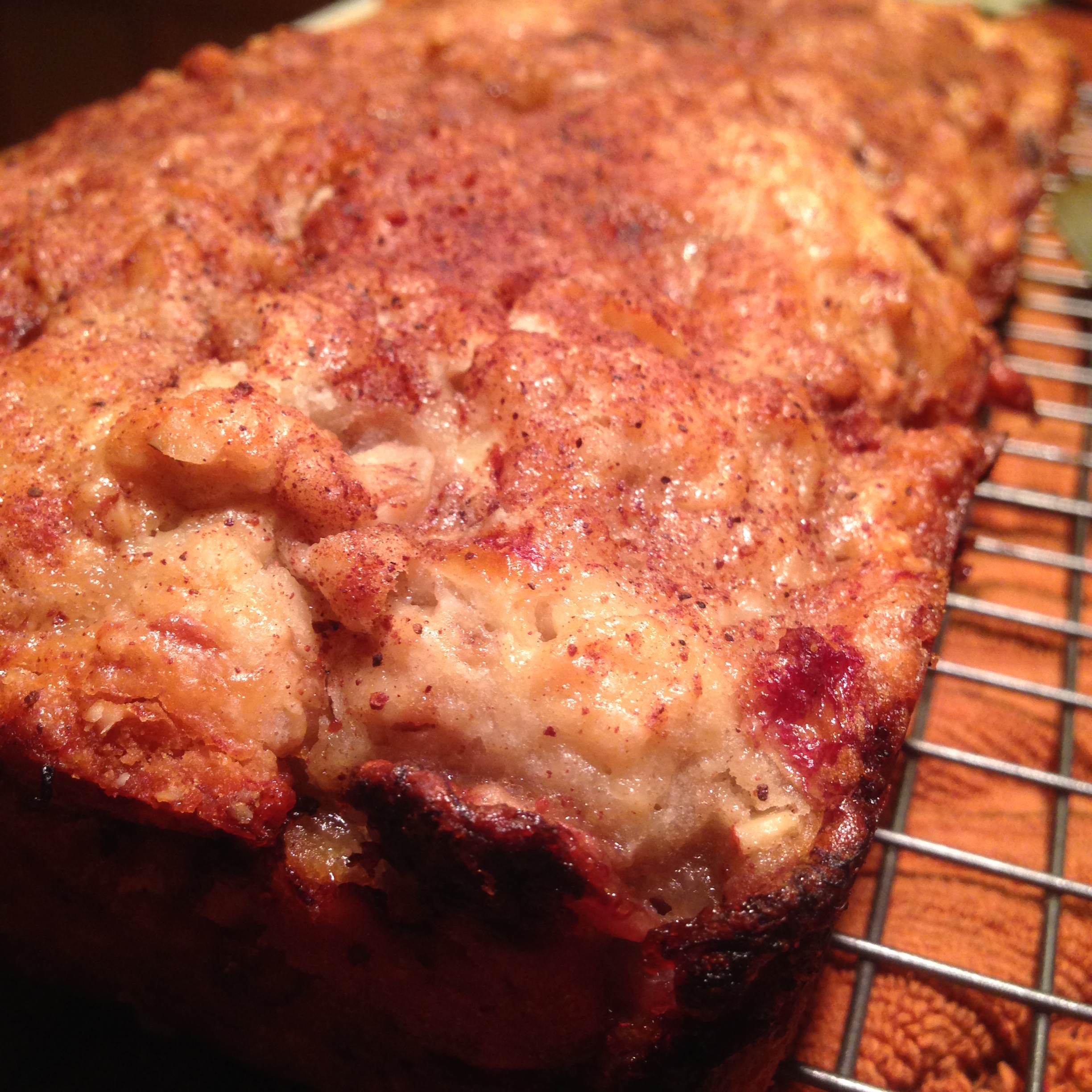
This makes a soft, delicious dairy-free, vegan banana bread. If desired, you can use a dairy-based yogurt. There doesn’t seem to be much of a difference in flavor between the two, the yogurt is mostly added for consistency. The bread is soft and cakey, make sure that the pan is oiled before baking and that you allow the bread to cool a bit before removing from the pan or cutting into it.

I think this is easily the equal of any banana bread made with milk and butter, in fact I would argue that omitting those ingredients makes for a less “bready” treat, tasting mostly of bananas, nuts and spices.

Serve warm or cool for breakfast with an herbal or forage tea or coffee. For a decadent dessert, toast lightly in an oven and top with a spoonful of vanilla or caramel ice cream.

Onion Beer & Cheese Soup

IMG_9243

Sautée in 3 tbs oil or butter over low to medium heat :

8 oz. green vidalia onions, white parts only, chopped. You could also use leeks or the white parts of scallions.

1 oz garlic, minced

Cook the onions until they become wilted and nearly tender. Bring the heat to medium.

Add :

2 tbs all-purpose flour

Stir and cook for two minutes or so, until the floury taste is gone. Maintain a medium heat.

Slowly add, 1/4 cup or so at a time, stirring all the while and incorporating the liquids into the soup :

1 1/2 cups beer (room temperature if possible)

1 1/2 cups stock (warm or room temperature if possible)

At first this will be like making a roux or a gravy, but gradually something resembling a soup begins to emerge. Cook for as long as required until the onions are tender and the soup seems close to thick enough to serve. As quickly as possible, working in small batches, blend the soup in a blender or food processor. Return to pot, return to heat, then add :

1/2 – 1 cup freshly shredded SHARP cheddar cheese.

1 tbs mustard powder

Dash of maggi or golden mountain seasoning or worcestershire sauce (optional)

Salt and freshly ground black pepper to taste

Melt the cheese and reduce the soup (if needed) to the desired serving consistency. Stir frequently to avoid burning.

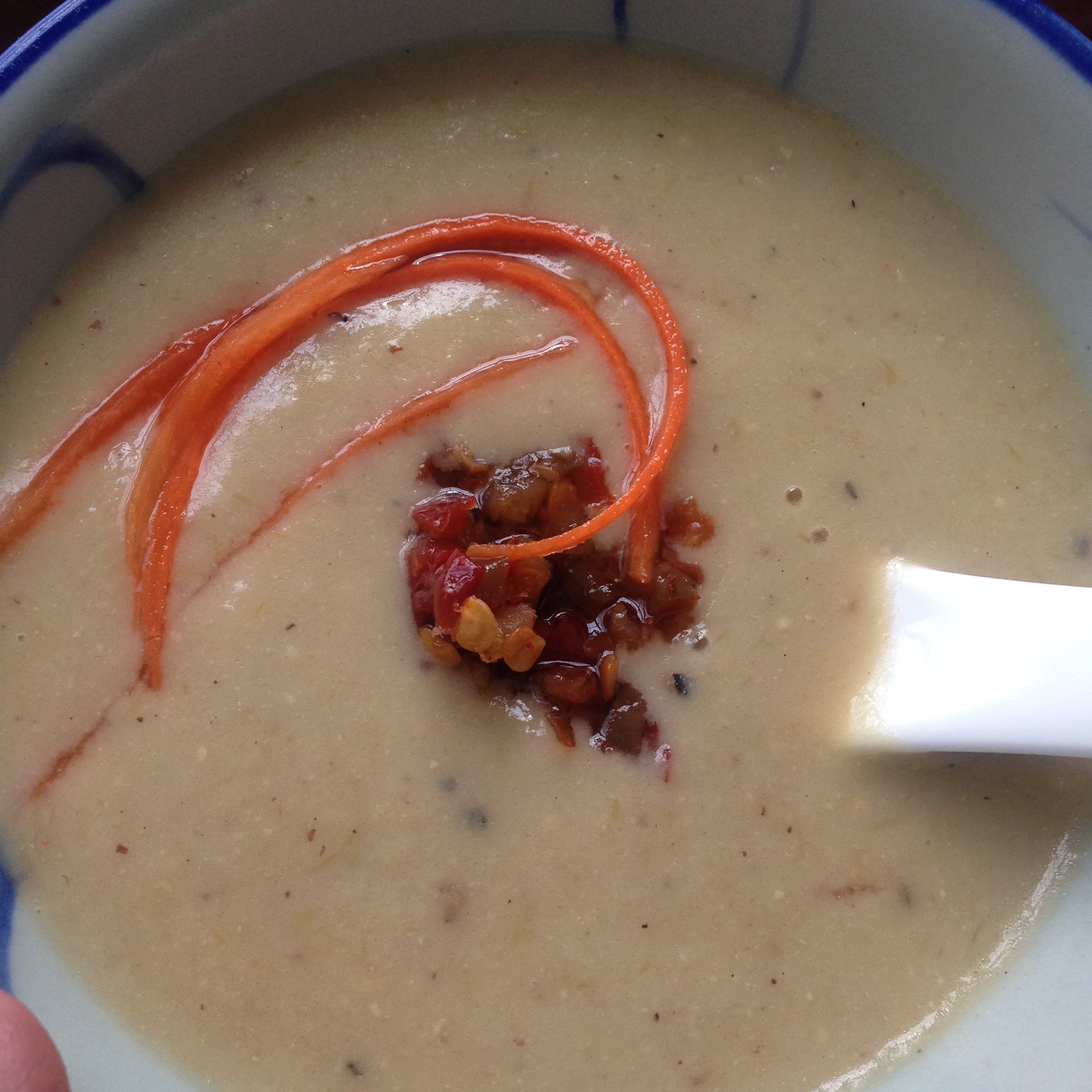
Serve as hot and as quickly as possible and garnish with something bright and spicy. In the above photo, I’ve used spicy Vietnamese style pickled carrots and pickled chopped cherry peppers. Also good are diced raw hot chiles and cilantro, or spring onion and sriracha.

Key : The key to this recipe is in the selection of the beer : in order to avoid either excessive bitterness or sweetness, one wants a well-balanced brew that is mild in its’ character. So if you go with a pale ale, avoid excessively hoppy ones. Lager? Stay away from over-sweet or malty beers. Wheat beer? Don’t pick one that has strong citrus or spice notes or is sugary sweet.

Winter Lentil Salad with Warm Spices

IMG_9270_2

Boil as you would pasta (in a large, boiling salted kettle) :

1 cup green or brown lentils

The lentils are done when they are al dente like pasta, still firm to the tooth but not troublesome to bite through.

Drain lentils thoroughly and quickly toss with :

2 tbs extra virgin olive oil

1 tbs vinegar of fairly light character (i.e. sherry, cider, malt, white wine, rice rather than red wine, balsamic or black)

Salt to taste

Add to lentils :

3 oz. celery and celery leaf, chopped fine

4 oz mild or sweet onion, sliced thin or same amount sharp onion soaked and squeezed in several changes of water

2 oz freshly chopped medium-heat green chile such as jalapeno, or mix of hotter and milder peppers

2 tsp ground cumin

1-2 tsp hot paprika or hot chile powder such as chile de arbol

1 tsp dry mustard

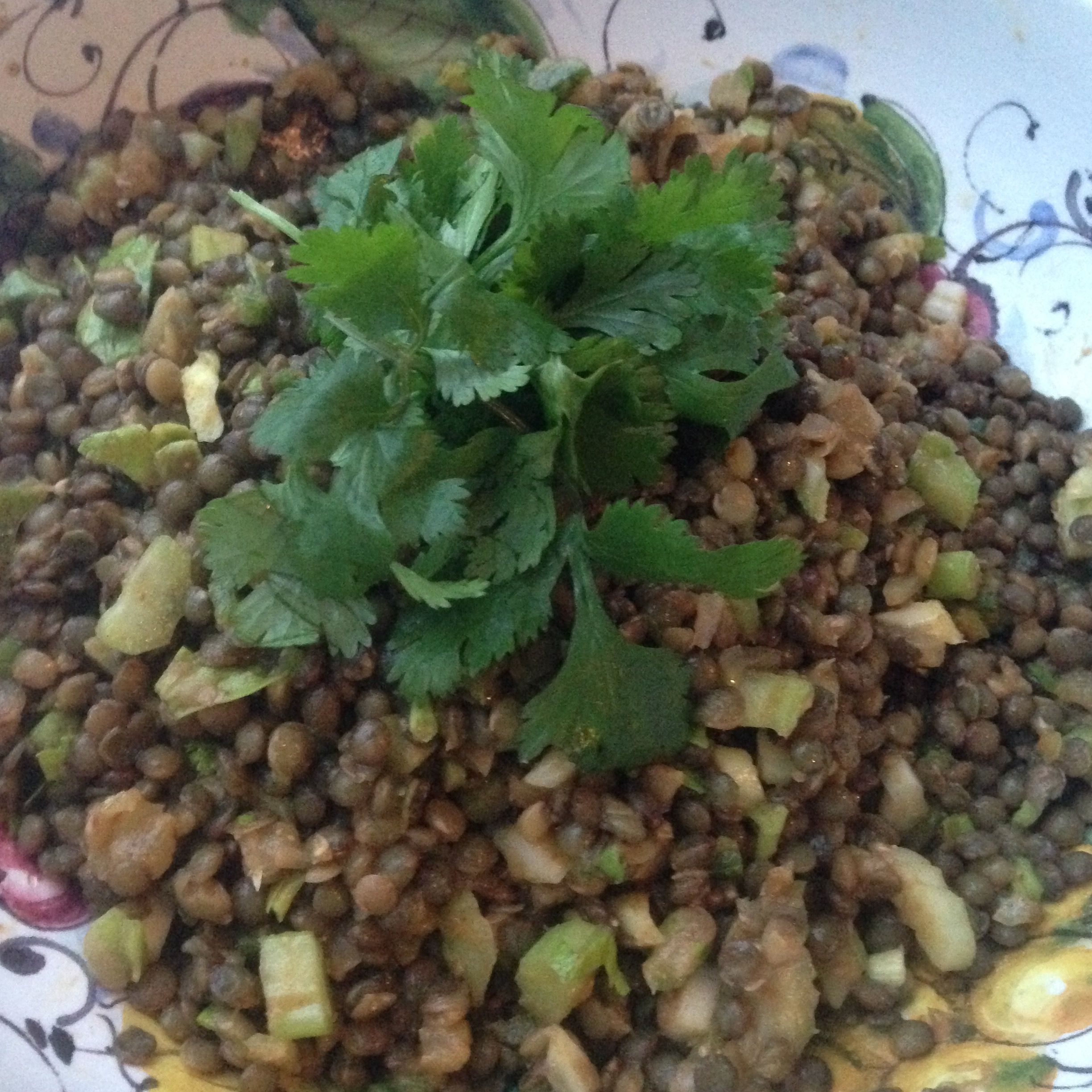
Stir thoroughly, allow a few minutes to settle, then taste and adjust seasonings. At this point add more olive oil and vinegar if necessary, it likely will be. This is very much an “add to taste” recipe, especially in terms of the dressing. I always add a bit at a time, let it settle, taste again. If it seems underwhelming when I am serving it, more can always be added. In particular, lentils will take a lot of both ingredients, much like the similarly mealy potato.

This can be served still warm as a side dish or a room temperature as part of a meal of mixed plates. It can be used as part of a meal of small plates or tapas, or as a side dish served with a more substantial meal. It is best as an accompaniment, rather than its’ own course. It fits well into meals of North African, Mediterranean, Indian, or non-denominational Vegetarian slant. It is also excellent served with a hearty winter roast and root vegetables.

I call it ‘warm’ rather than spicy in terms of the balance represented in this recipe. It can be freely made “spicy,” by simply adding more chiles and dry spices. This is a very adjustable recipe, and will often be altered or added to based on what I am serving it with. Garnish it with something complementary to the meal that it accompanies : fresh cilantro for Indian or Southeast Asian fare, an extra splash of olive oil and sprigs of parsley for Greek or Italian, etc.

Just as any experimentation in garnishing will likely work with such a simple, adaptable recipe, one could go further and incorporate all kinds of ingredients at hand to the salad itself : Some wild mushrooms, quickly sautéed with oil and thyme. A couple of small cucumbers, deseeded and neatly chopped. Some tahini or miso paste. A squeeze of lemon and a pair of minced anchovies. Crispy fried slices of garlic. Black walnuts and a splash of walnut oil. And so on…

In a similar vein, this is a recipe meant for constant tasting and adjusting by the cook. I never measure any of these ingredients when I make this kind of salad except when testing a recipe. I am always tasting, adjusting, tasting. So should you, when making a dish like this. Taste each time you add a new ingredient or three, taste and adjust accordingly. Trust your judgement. Trust your taste. You’re the one who decides what’s best.

Warm Kale Salad

IMG_8074

Combine and whisk together in a large bowl :

2 tsp toasted sesame oil

2 tsp prepared mustard, preferably of high quality

1/8-1/4 tsp tamari

1/4 tsp vinegar (sherry, rice wine or black vinegar are best)

Dash of Maggi or Golden Mountain Seasoning (optional)

pinch or so of salt

1/8 tsp sichuan peppercorns (or black peppercorns), freshly ground or crushed

Take :

10-12 oz kale leaves, de-stemmed but not chopped

Place in a large pot of boiling, salted water for 2-3 minutes, pushing the kale down and covering the pot with a lid.

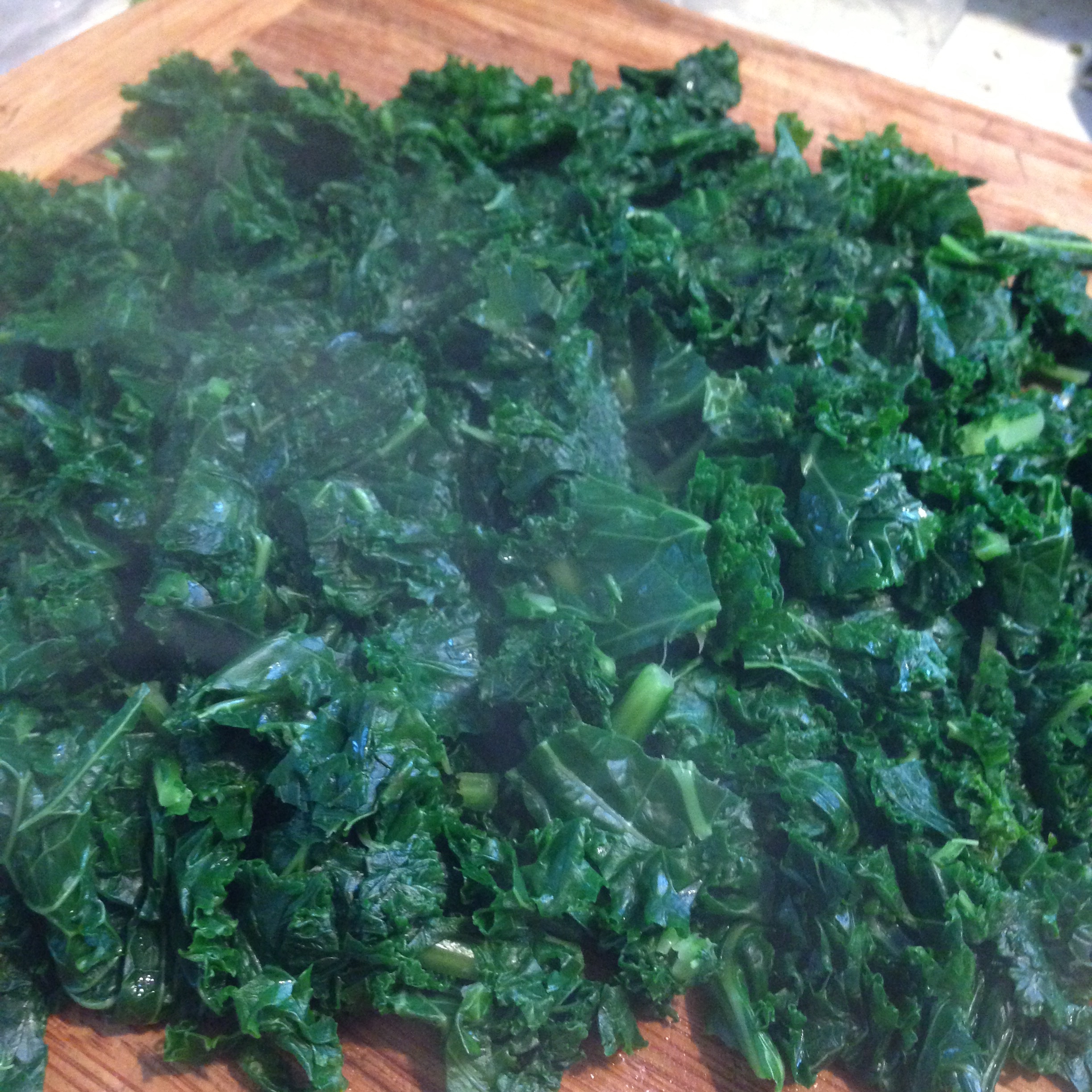
Drain kale immediately. Then quickly wrap kale in a thick kitchen towel and squeeze as much liquid from the kale as desired. I usually don’t fuss over this too much, just making sure that the larger portion of the water absorbed by the kale has been squeezed out.

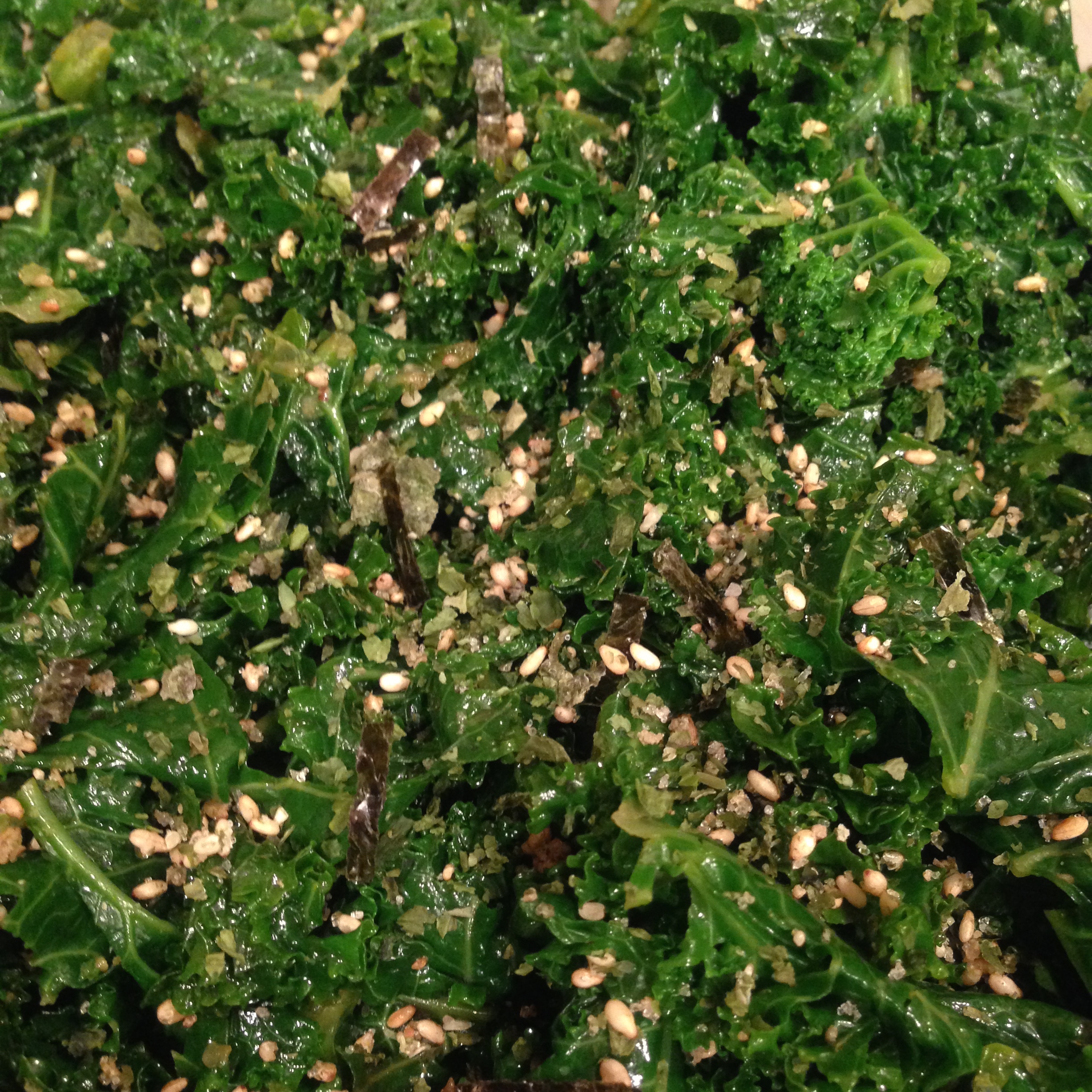
Place the kale on a chopping board and roughly or finely chop it depending on your tastes. Toss immediately with the dressing, turn out into a bowl and serve with fork or chopsticks. Garnish with sesame seeds or–even better, a Japanese seaweed-sesame seasoning combo like Nori Komi Furikake.

IMG_9071

This is one of the simplest ways to serve kale, accompanied only by seasonings selected to bring out its’ naturally complex and hearty flavors. This feeds two people as a starter and one person as a hearty lunch, accompanied perhaps by a piece of fruit or hunk of bread.

Kale salad is as ubiquitous as bad driving in the Northeast, too often it is either matched with incongruous ingredients (radish? blueberry?) or just not properly cooked. I find kale best lightly boiled like this (or even steamed if you can muster the energy) ideal for a salad, served either warm or cool. Now, if I was to serve this particular salad cool I would add perhaps a bit more of the liquid ingredients, but warm these proportions are just perfect.

Key – The key to this recipe is to proceed as quickly as possible once draining the kale, as maximum heat in the greens will cause the flavors of the dressing to blend better and come out more.

Kohlrabi With Apple and Herb Dressing

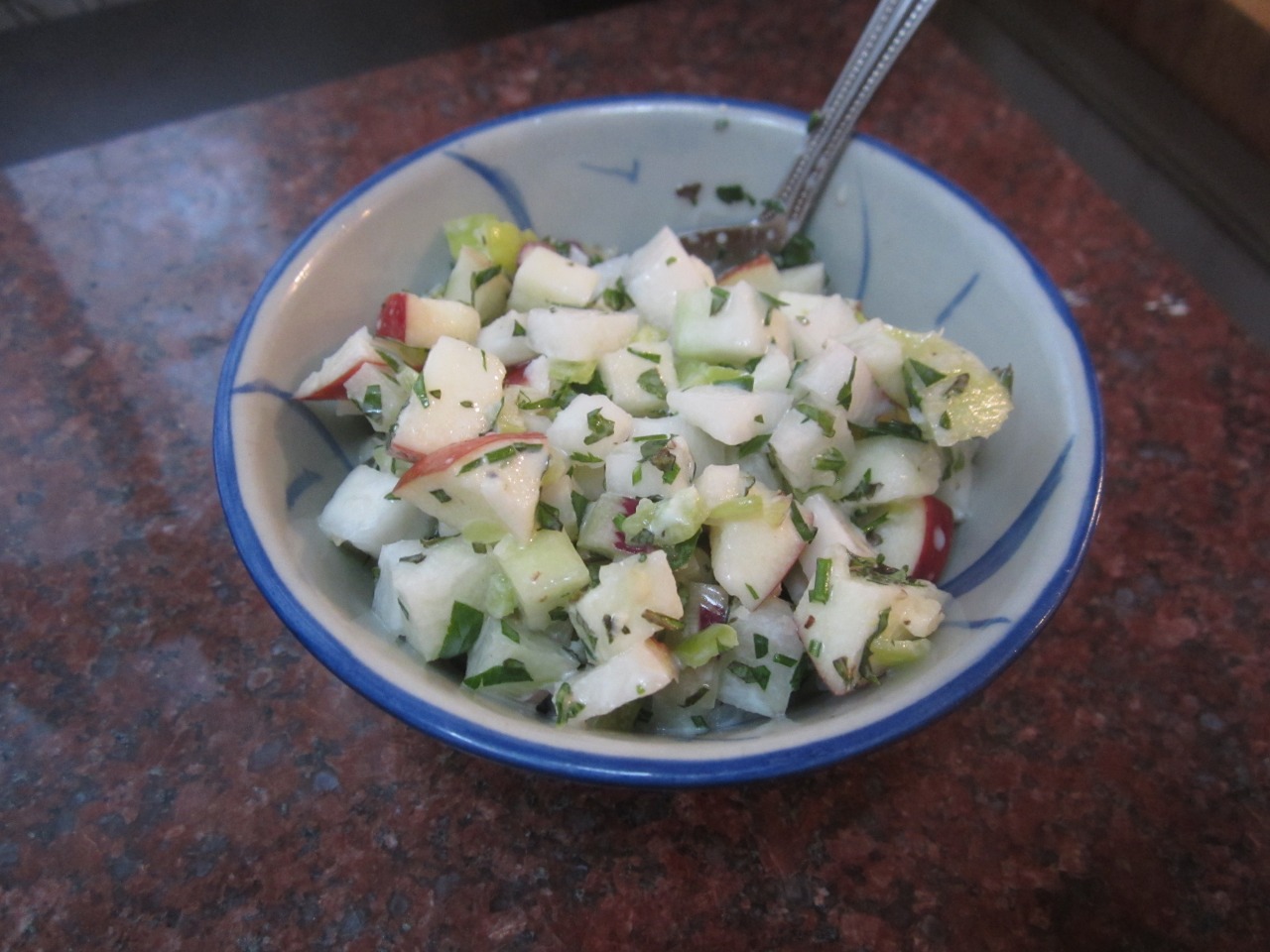
kohlrabiandapple

Combine :
1 lb. kohlrabi, cut into large dice
1/2 tsp kosher salt

Let sit for 1/2 hour or longer

Combine :
1/2 cup strained or greek-style yogurt (or thick soy yogurt)
2 tbs walnut or olive oil or a mix of the two
1 tbs chopped chives
2 tbs fresh mint, chopped fine
2 tbs fresh italian parsley, chopped fine
1 tbs (or more) garlic, minced
ground white pepper to taste
1 or 2 small chiles, chopped fine
4 oz. firm-fleshed apple, large dice

Toss with kohlrabi and serve.


A lot of people react negatively to kohlrabi. I love it, and eat raw slices of it. But then I eat raw radishes, too, so… for those who don’t care as much for it, this preparation softens its’ intensity with apple and fresh mint. The yogurt should be thick, but even if it is, this can be a somewhat “loose” salad. Keeps well, tastes better on the second day.

Coriander Glazed Carrots

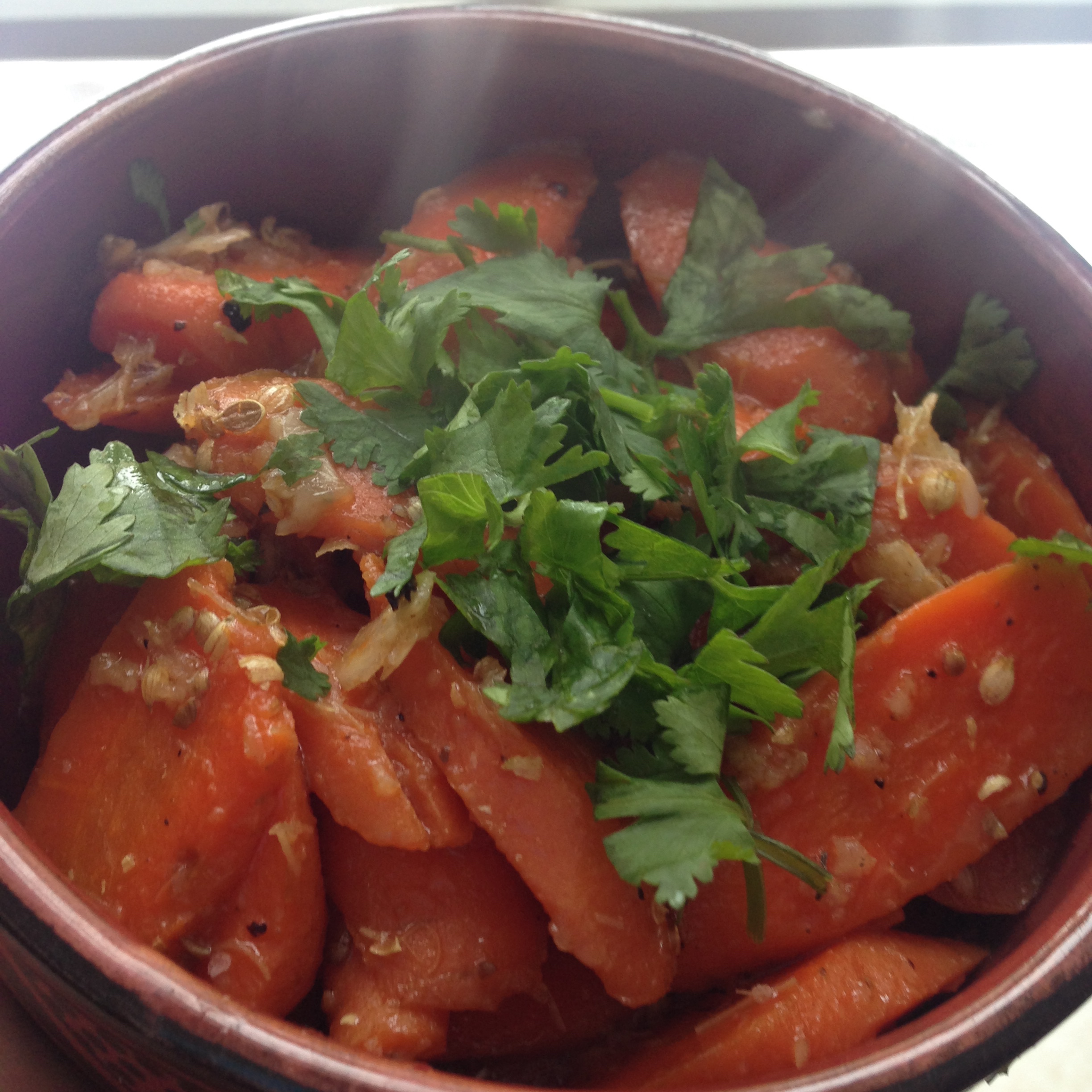
IMG_8663

Take :

8 oz. carrots, sliced into 1/4″-1/2″ rounds (I like to bias cut mine to make them longer, like above)

Add to saucepan of boiling, salted water.

Boil for 3-4 minutes, then drain immediately.

Heat in a wok or sautêe pan over medium-high heat:

2 tbs neutral oil such as sunflower or vegetable

When the oil is quite hot, add :

1 tbs of coriander root paste (see below)

Stir-fry for one minute, then quickly add the boiled carrots.

Stir-fry or toss vigorously for one minute.

Add :

2 tbs sherry or cooking wine

1/2 tsp of sugar

Stir or toss vigorously for one minute or until the alcohol evaporates

Add :

1/2 tsp of freshly toasted and crushed coriander

salt and freshly ground black pepper to taste

Cut the heat and serve immediately or cover and keep warm, garnish with abundant cilantro / fresh coriander. This is best hot, but also good at room temperature.

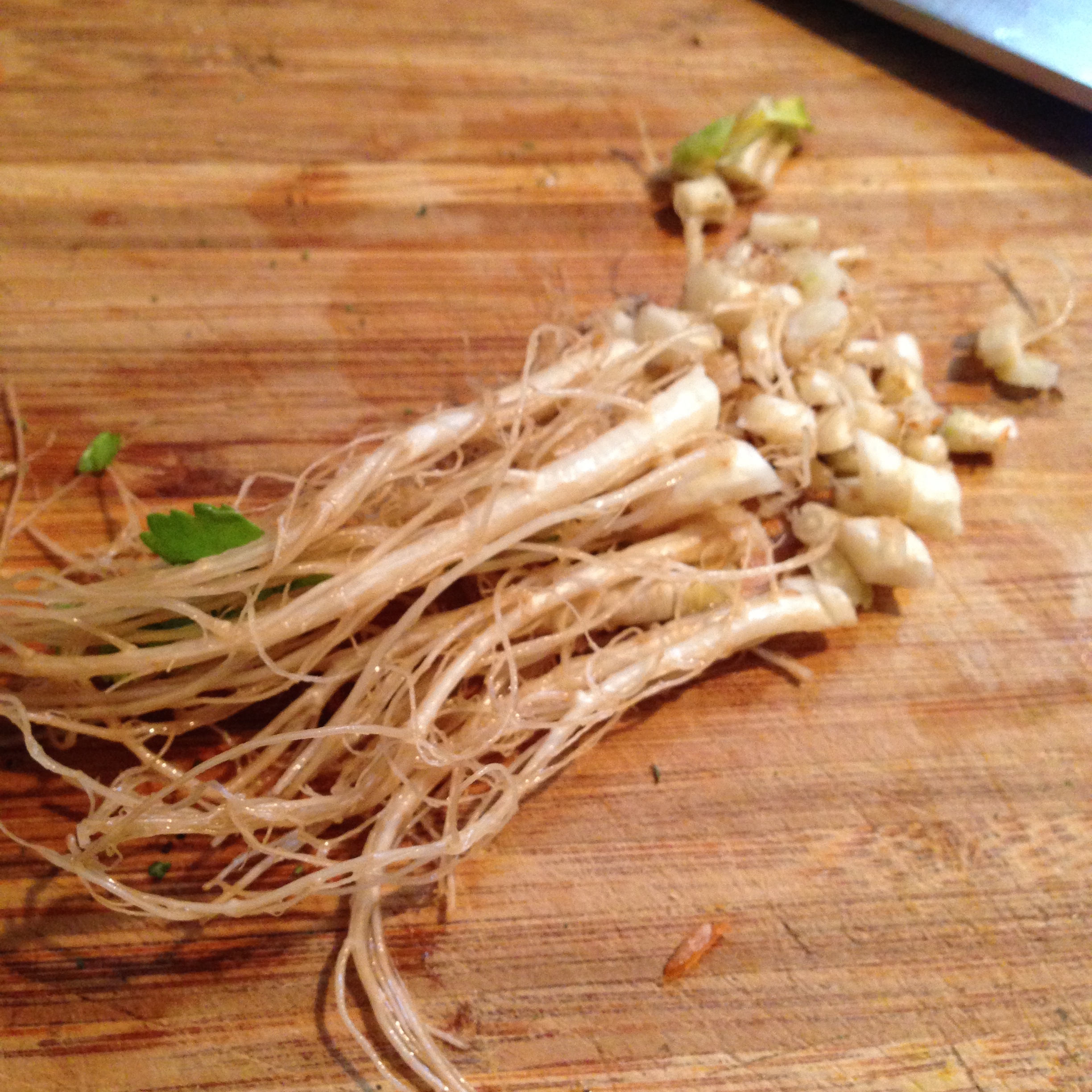
IMG_8656

Coriander Root Paste :

Combine in a mortar and pestle :

1/2 oz finely chopped coriander roots (roots of one bunch)

few pinches kosher salt

few grinds of black pepper

2 cloves of garlic

Mash to desired consistency. To get a more paste-like consistency, you can add more salt. This should make about two tablespoons. It can be kept for a great while if salt or oil are added. You could of course also make this in a small food chopper / processor.

This is a simple and versatile dish that could accompany many different types of cuisine. It is most definitely for lovers of coriander though! The roots add a sophistication to the flavor that there is no substitute for.

This recipe accounts for about 2 servings as a side dish, but can be easily multiplied.

Key : The key to this recipe is to have everything prepared and move swiftly during the stir-fry stage.

Winter Root Vegetable Stew with Paprika and Mustard

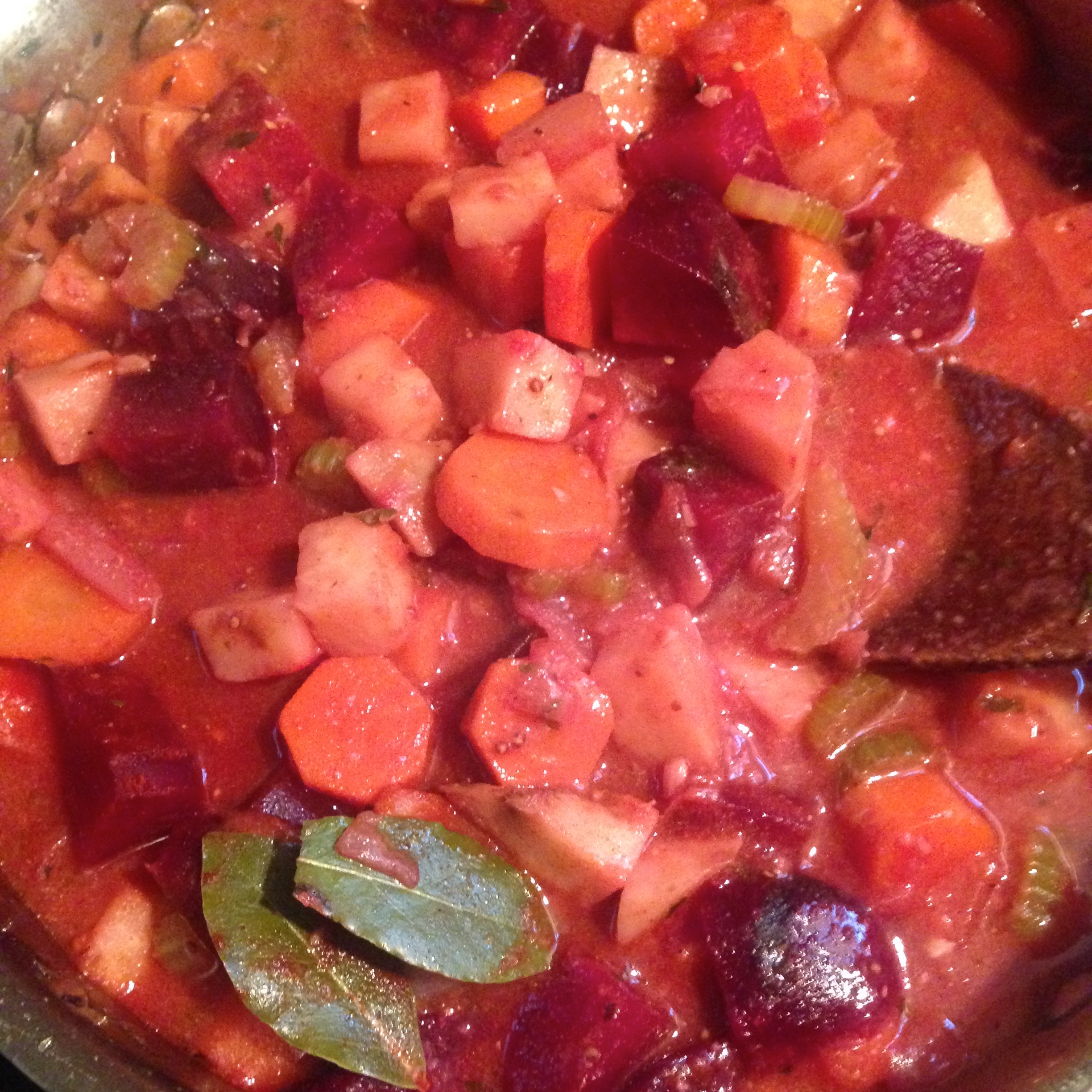
IMG_8547

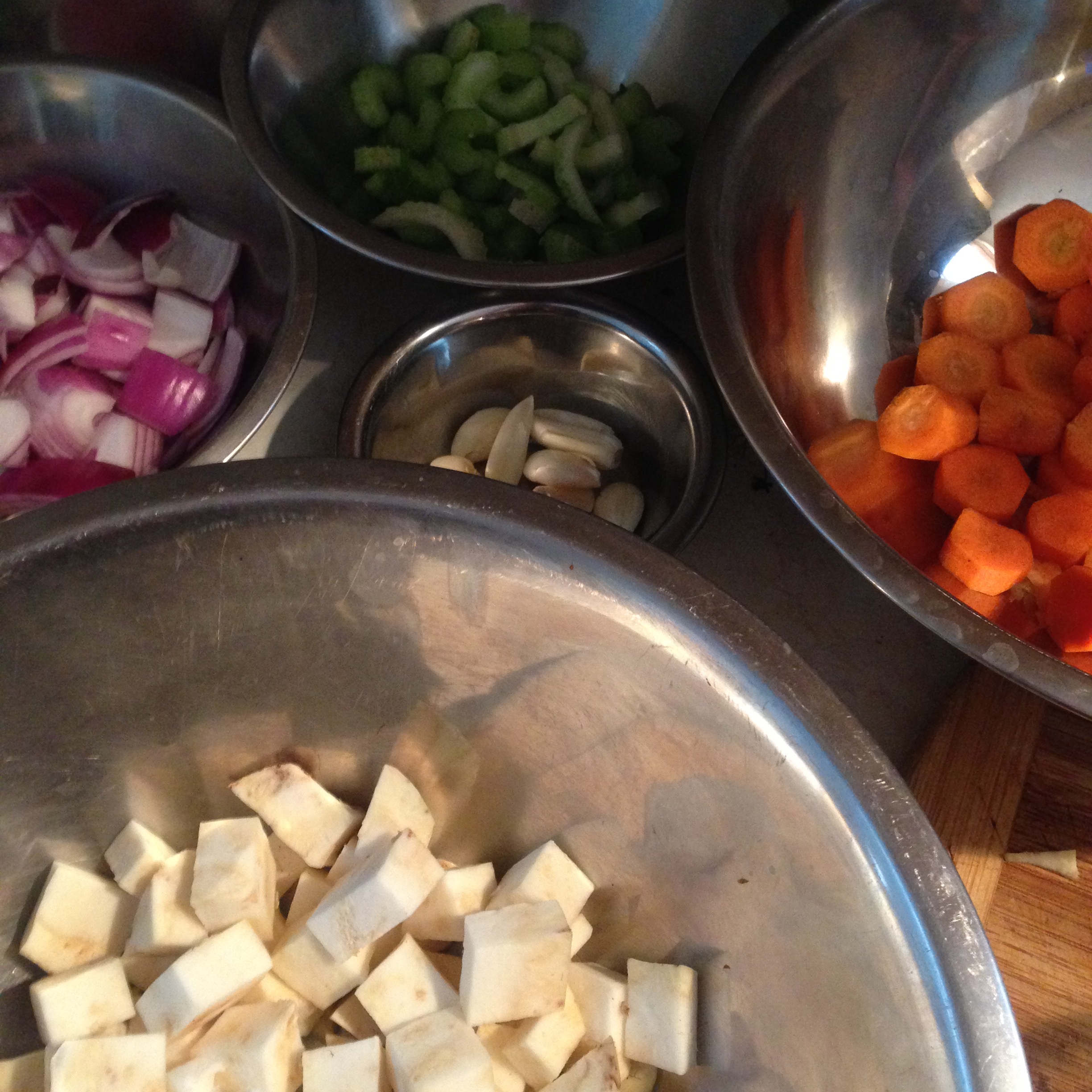
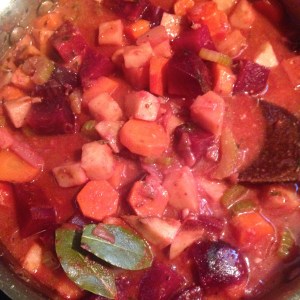
This is a hearty, rich main course dish which could be varied endlessly with sides and additions, vegan or not. One could of course serve it with starches such as noodles or potatoes, but I find that it is substantial enough on its’ own. In fact, what I will recommend is a garnish of sharp, very thin raw vegetables and fresh herbs, if possible. Like all proper stews this dish is much better reheated and served on the second day. I roast the beets and then add them to the dish before adding the spices for aesthetic reasons. They change the color of the dish quite dramatically, but in a nicer way then when added in the beginning. One of course could use golden beets or white beets instead and dispense with all this roasting nonsense.

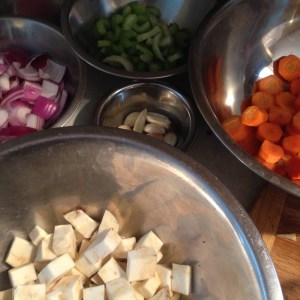
This is a dish in which prep and timing are pretty essential. Have all your ingredients chopped and sized, take your time about the cooking of this and remember to let it cool, sit overnight and then serve the next day. It will be much the better for it.

Roast @ 425° :

12 oz beets, unpeeled, wrapped in foil

The beets are done when they a little bit more firm than you want in your finished dish. Remove them, keeping them wrapped and let them cool naturally.

Heat in a pan (deep enough to accommodate all the ingredients, but wide as possible) over medium heat :

3 tbs oil of choice (I use olive)

Add :

10 oz. onion, large dice

Sautée for 5-10 minutes, until softened.

Add :

2 fresh bay leaves or 4 dried bay leaves or 4 bayberry leaves

Add :

5 oz celery, cut into 1/2″ thick pieces

Sautée for 5 min or so, until softened.

Add :

1 oz of garlic, freshly chopped

Sautée for 3 min or so.

Add :

12 oz carrots, cut into 1/2″ rounds

Sautée for 5-10 min or so.

Add :

12-16 oz celery root, 1/2″ x 1″ pieces

Sautée for 3 min or so.

Deglaze pan with :

2 Tbs. Sherry or Chinese Cooking Wine

Add :

Enough vegetable stock (preferably a rich roasted stock) or other stock or water to cover the vegetables well (1-1.5 quarts), bearing in mind the beets to be added later.

1-2 tsp crushed dried juniper berries

2 tsp dry mustard

2 tsp dried thyme

Grinds of black pepper

Bring the pan to just short of a boil, then cut the heat to a slow, mild simmer. Allow this to cook until the sauce has thickened and the vegetables are close to being tender enough to eat. Always bear in mind that the vegetables will cook a bit in their retained heat. If the vegetables seem close to done and the sauce is far too thin for your liking you can add a liaison. Heat some oil and whisk in an equal amount of flour (I usually go about 2 tbs of each), whisk and heat for a minute or two, then add in some of the hot fluid from the stew. Keep adding fluid until you have something that is not yet liquid but no longer paste. Add this back into the stew and it should thicken up nicely.

When you feel like you are close to being ready to cut the heat, stir in the following :

The cooked beets, which by now you will have peeled (very easy once roasted) and cut into the appropriate size (1″2 x 1″ chunks in this case).

1 1/2-2 tbs prepared mustard (whole grain or dijon styles are good)

2-3 tbs of paprika (I usually use a mix : this time it was 1 tbs hot, 2 tsp smoked hot and 1 tsp sweet)

Salt and freshly ground black pepper to taste

Allow this to cook for another few minutes, then adjust your seasonings as needed.

Serve right away or allow to sit. Reheat the next day and serve with fresh garnishes.

All times used are approximate. I cook by taste and texture. It’s far easier and more accurate than following a clock. In each stage of the sautée, the vegetables should be cooked until they begin to soften. If the pan gets too dry (which shouldn’t happen) you can add some extra sherry or wine, or water if necessary. The stewing process will take from an hour on, depending on how slow your simmer. Allow it to develop on its own, checking and stirring every 10 minutes or so. You will know when it is done.

This recipe can be varied in what vegetables are used, provided they are approached with understanding of how long they take to become tender. Of course it could be garnished or accessorized in dozens of ways. It’s already pretty hearty in itself but if you wanted to serve it with noodles or rice I’m sure it wouldn’t be bad. I prefer to go the other direction, and add something sharp and bright as a garnish, like paper-thin slices of spicy black or daikon radish, fresh snips of chive or field garlic, raw chiles, pickled or preserved vegetables, and of course fresh herbs if available.

I have left the spicing at kind of an entry-level dosage. All of the seasonings can be added again at the end, which is usually when I toss in a little more thyme or juniper or mustard or what have you. The flavor is hearty, and deep. It may remind one of a treatment of beef or pork in terms of the flavorings used, but this is no meat substitution recipe. The combination of thyme, mustard and paprika complements the beet-celery root-carrot trinity. But perhaps you will discover an even more perfect one!
IMG_8530

Key : The key to this recipe is making all the vegetables the same consistency, particularly one that has a bit of texture to it. For some people that solution lies in very precise cutting, for me I’ve always just preferred to add the ingredients one by one and rely on intuition. Some people like to throw in everything at once and cook it long and slow. There’s no right way, just one that works.
Sweet Hot Pickled Carrots

IMG_8166

This recipe is so simple I will dispense with the usual list of ingredients and instructions and just describe the process. Just be sure to read it all the way through. We’re not children here.

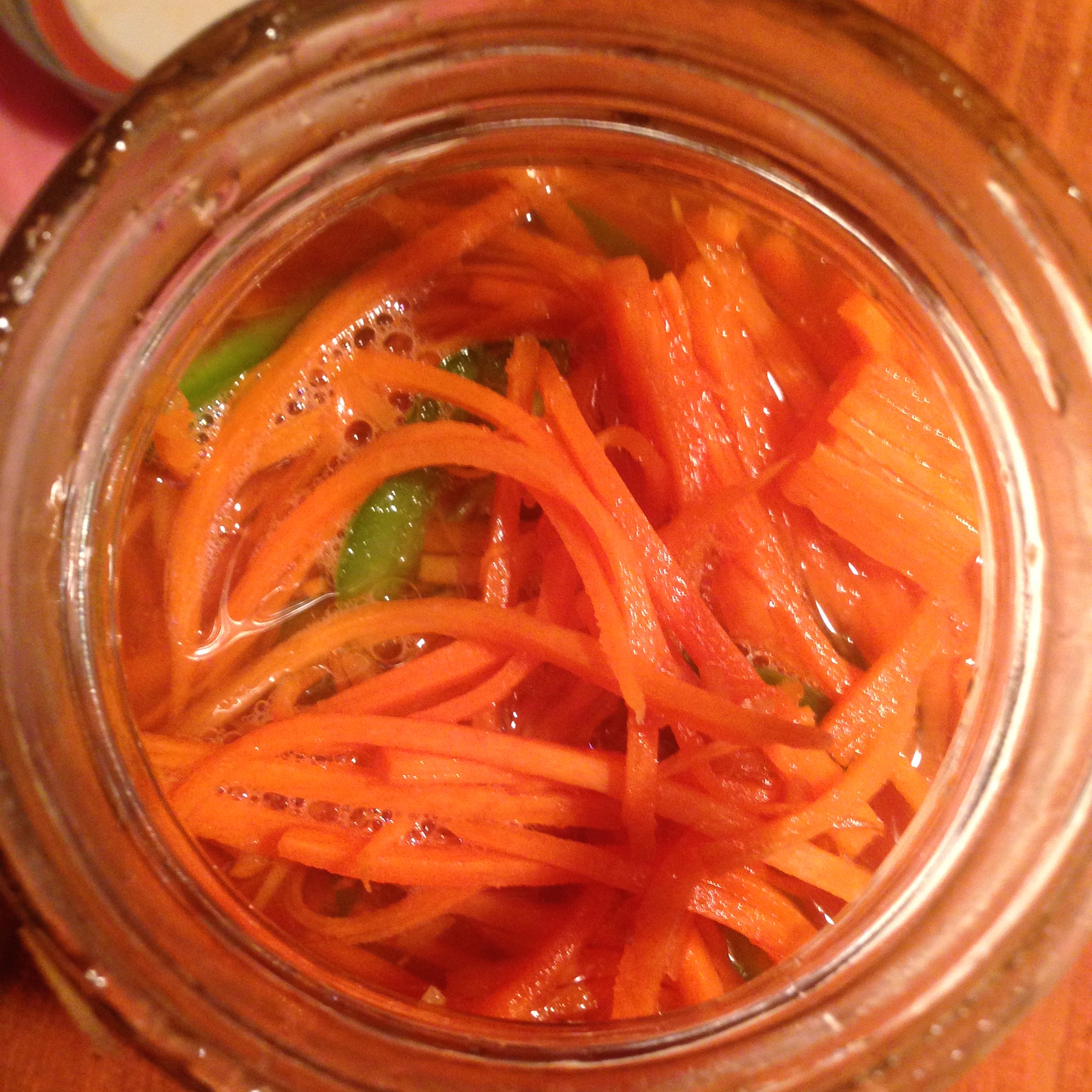
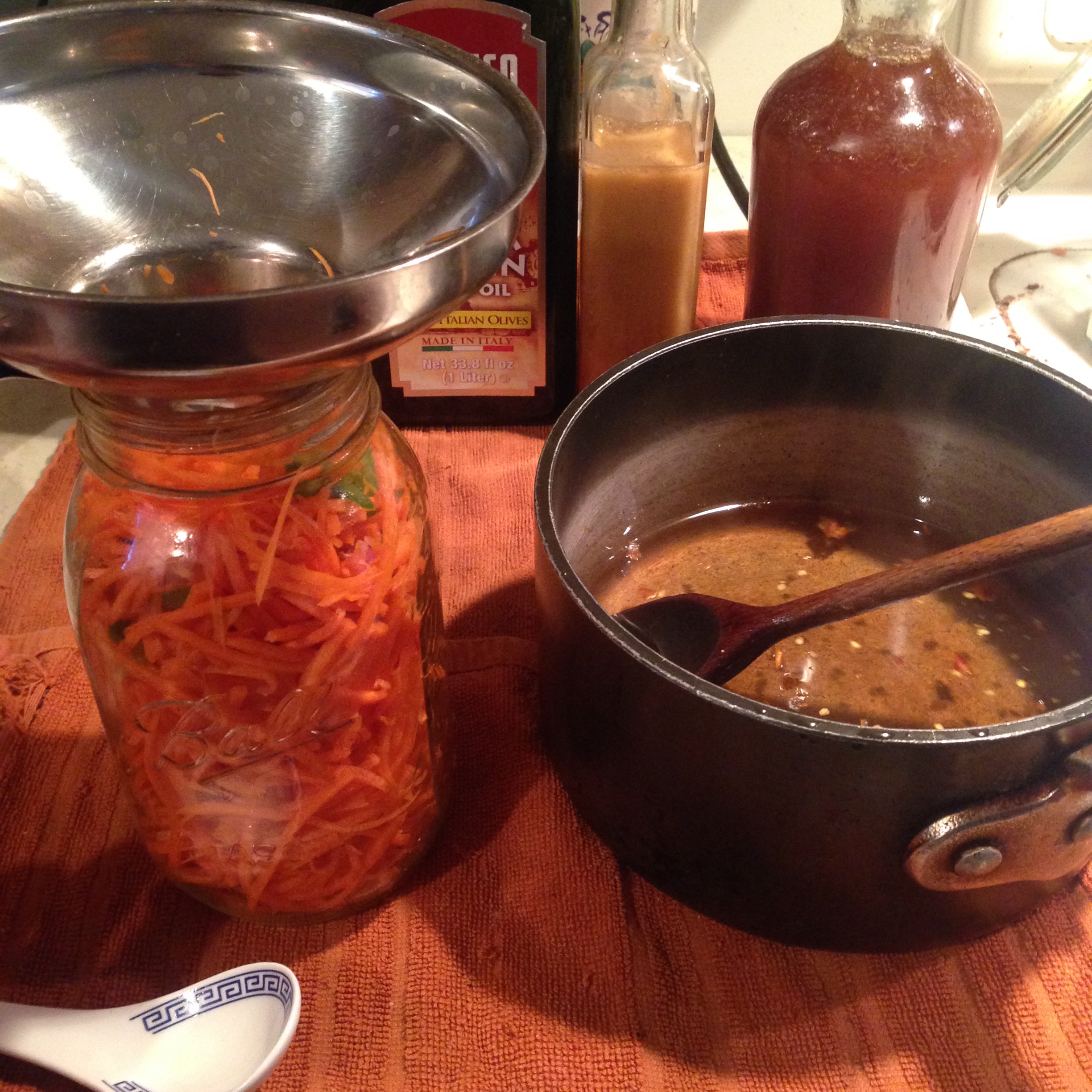
What you need for this is a quart-sized mason jar stuffed all the way full with shredded carrots (preferably on the smallest blade set of a mandolin) and a jalapeño sliced or cut into matchsticks. Usually this entails about 12 oz of carrots, with maybe 1/4 of that going to waste on nubs too small to pass through the mandolin. You can also simply grate them, although the texture will be vastly inferior. You could also practice your knife skills on them and cut long julienne by hand but I am not responsible for any bodily harm.

Once you have this mason jar stuffed full of carrots, place a canning funnel in it. If you don’t have a canning funnel, go buy one. Then place a small saucepan on the stove and in it heat 2 cups of seasoned rice wine vinegar, 1/2 tsp salt, 1/3 cup of sugar, and dried, crushed hot red chiles to taste. I use the very hot chinese red chiles and usually grind two of them fresh in a mortar and pestle. Bring this mess up to something close to a boil, enough to dissolve the sugar. Stir it thoroughly.

IMG_8165

Being intelligent about the whole process and using how ever many towels you need, bring the still quite hot mixture in the saucepan over to the quart-sized mason jar stuffed full of carrots and pour the mixture in. It should come to about the point at which the “shoulders” of the jar begin.

Allow this to sit and cool without capping it. Theoretically you could sterilize both the jar and the cap in this procedure. My experience has been that these things just don’t last long enough around willing eaters to warrant that. Once the jar and its contents are cool, cap the jar and refrigerate. The pickle will be ready in a handful of hours (although of course 24 is best), and it is best served chilled.

This is one of the staples of my kitchen, and has proved quite popular with those I make food for. Especially me! These were styled on the Vietnamese do chua and primarily made for banh mi, alongside a spiced daikon pickle that I also make. So it goes without saying that they are a good sandwich topping. They also are great in composed salads and on tossed salads, added to noodle bowls, noodle soups, regular soups, as garnishes, in omelettes, etc. etc. etc. A real kitchen standby, and one that can be a vehicle for your own style and creativity. Tell me what you make with them!

Roasted Eggplant With Preserved Lemon

IMG_8041

Take :

2 large unpeeled Italian eggplants (about 2 lbs), sliced in half, stem end trimmed.

Rub eggplants with olive oil and place in a large roasting pan, large enough that the halves do not touch.

Roast @ 425° for 15 minutes, then remove. Puncture each piece with a fork or knife.

Allow to cool.

Seperate the skin from the cooked pulp of the eggplant, reserve the skin for another use.

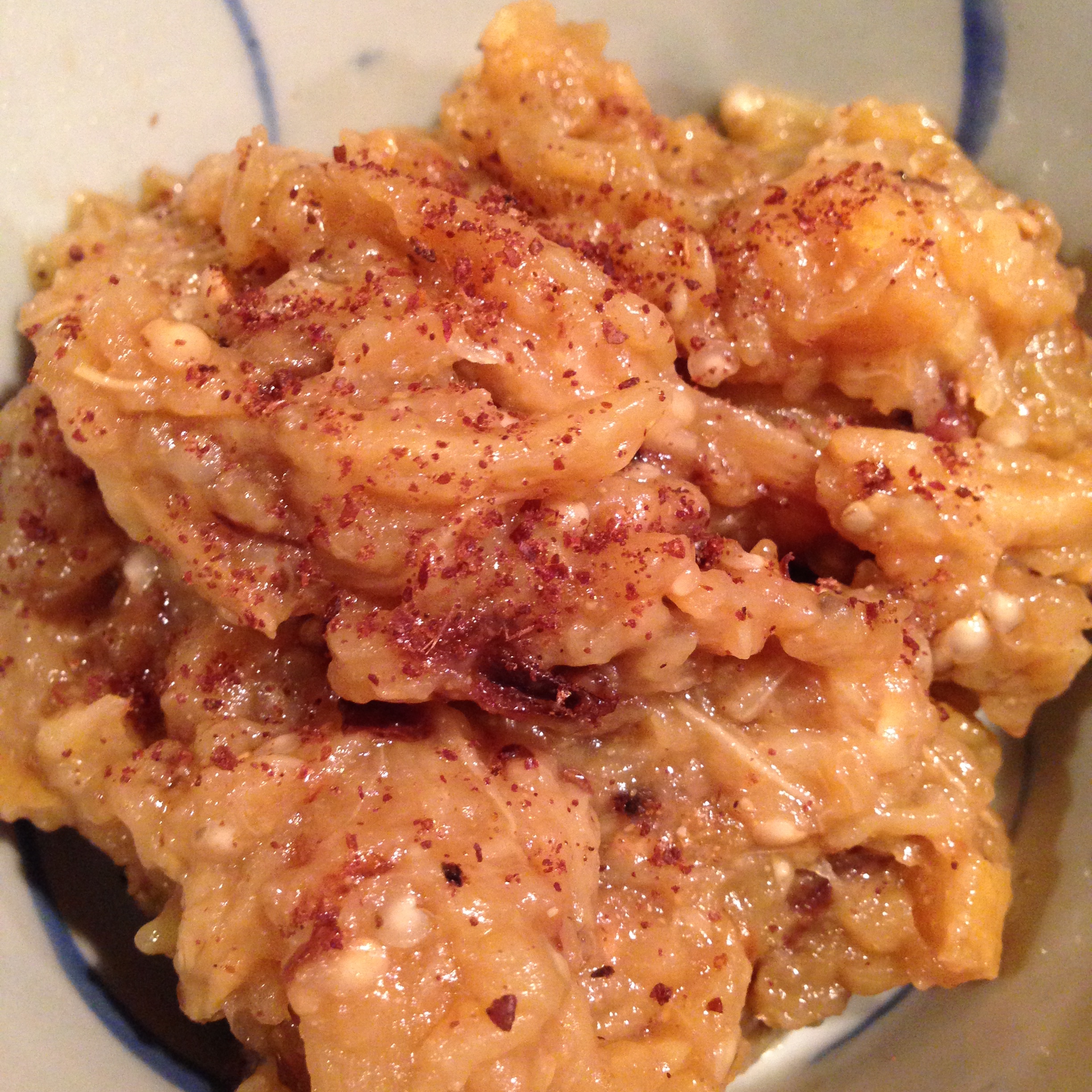
Mash the eggplant pulp to desired consistency, or puree if need be.

Add :

1/4-1/2 cup of preserved lemon, preferably homemade

*I would add 1/4 cup, combine, taste, and then add more as desired.

1 tsp or more of cumin, preferably freshly toasted and ground.

Salt to taste.

Allow to sit overnight.

Before serving, allow to come to room temperature.

Then add extra olive oil, if desired.

Before serving, garnish with :

Pinches of dried ground sumac or paprika.

Excellent served as part of many meze or appetizer dishes. Perfect with flatbreads of all kinds, but also makes an excellent dip for raw vegetables such as celery, carrot and parsnip. One could of course add many other ingredients to this before overwhelming the taste of the eggplant and preserved lemon. In addition to other spices or herbs, yogurt could be added, especially if one is looking for a creamier dish. I prefer to leave this one chunky, and scoop up big swathes of it in celery boats. Ah, to each their own.

KEY : The key fact to remember with this dish it so serve it at room temperature.